
On the occasion of the 25th Winter Olympic Games
Casa Italia Milano Cortina 2026
6–22 February 2026
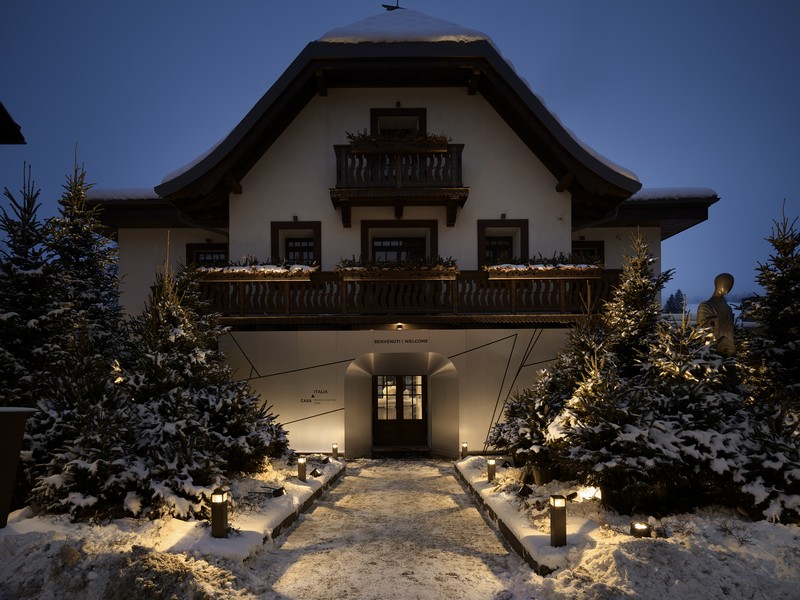
FARSETTIARTE is the venue of Casa Italia Cortina
On the occasion of the 25th Winter Olympic Games of Milano Cortina 2026, Casa Italia once again stands as the symbolic home of Italian excellence—a place of encounter between culture, vision, and Olympic values. A project of CONI – the Italian National Olympic Committee, Casa Italia interprets and narrates the identity of the country through hospitality and the values of sport, art, architecture, and design.
Located in three key venues—Triennale Milano, the Aquagranda Olympic Preparation Centre in Livigno, and Farsettiarte in Cortina d’Ampezzo—Casa Italia welcomes athletes of the Italia Team, partners, and the international public, offering an experience that conveys Italy’s cultural heritage to the world.
Musa is the theme chosen by CONI for Casa Italia at the Milano Cortina 2026 Olympic Games, highlighting the central role that the Italian peninsula has played for centuries in the global imagination and culture. Traditionally, the Muses—protectors of the arts, including sport—are the guardians of memory and the sources of inspiration who protect and inspire all human knowledge. In classical mythology, these figures accompanied the gods, who were believed to watch over both physical education and the spiritual formation of the young.
The Muses are the nine daughters of Zeus and Mnemosyne, the goddess of memory, born after the father of the gods, through his victory over the Titans, brought a new order to the world. The Muses thus eternalize the harmony that triumphs over chaos through the innovative principle of the arts combined with the memory of the past. Perhaps for this reason, they are the only deities, together with Zeus, worthy of the title “Olympian.”
On a symbolic level, for the Greeks the Muses represented the phenomenon of inspiration—that moment of access to a flash of genius, an intuition capable of changing ourselves, history, and the world around us. The concept of inspiration has not changed across historical eras: from Greek mythology to the Romantic theorist and Nobel Prize winner William Butler Yeats, inspiration has always remained a mystery, the result of a sudden, magical process. This remained true until the advent of psychology, with Freud and Jung providing an internal explanation rooted in psychic conflict, and materialist philosophers interpreting it as a symptom of economic infrastructures in ideological conflict.
What Casa Italia chooses to emphasize is Italy’s ability to become a Muse itself—a source of inspiration for the most important minds in international culture—because those who visit the country allow themselves to be permeated by it, shaping their way of seeing the world.
When Pierre de Coubertin founded the modern Olympic Games, he immediately envisioned the union of art and sport, as had occurred in ancient Greece. In an article published in Le Figaro in 1904, he wrote:
“It is time to establish a new stage and to restore the Olympic Games to their original beauty. In the days of Olympia’s splendor, literature and the arts, harmoniously combined with sport, ensured the greatness of the Olympic Games. It must be the same in the future.”
From the Stockholm Olympics in 1912 until the London Games in 1948, artists competed alongside athletes at the Olympics. Later, it was decided to organize art exhibitions without awarding medals to artists. Even today, the Olympic Opening Ceremonies are a form of performative art capable of conveying the universality of the Olympic message, embracing the highest values humanity can express.
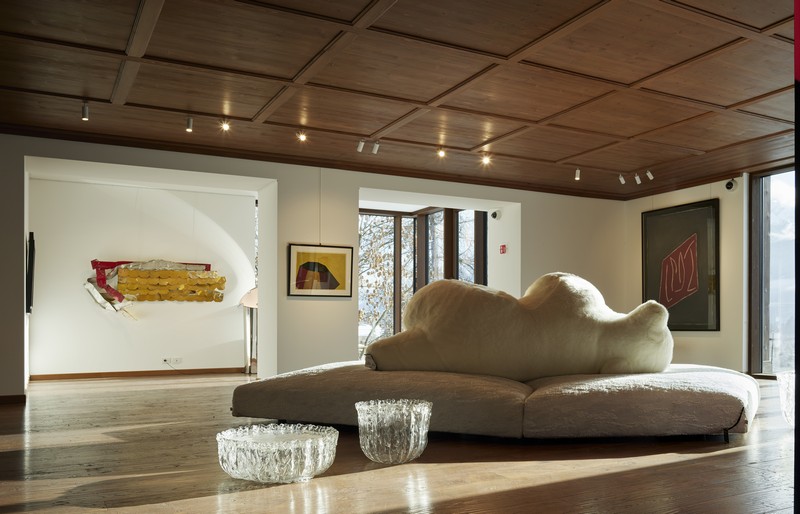
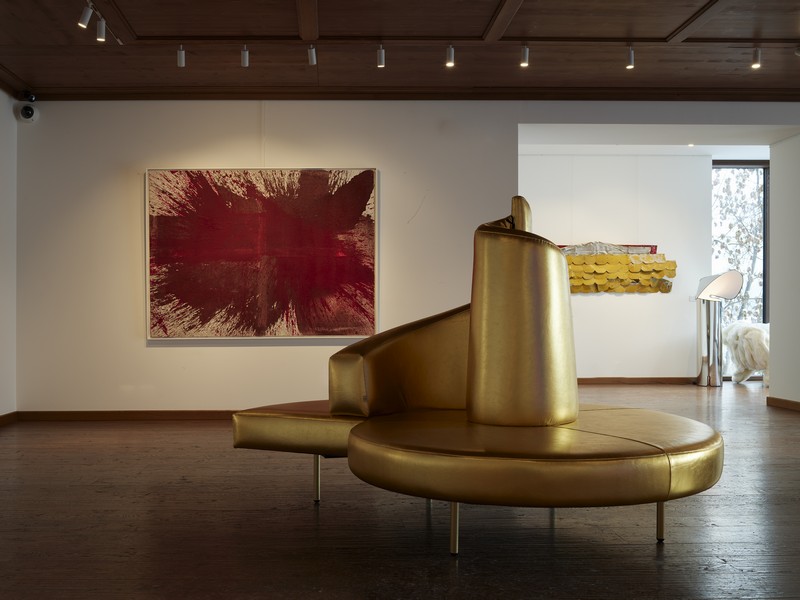
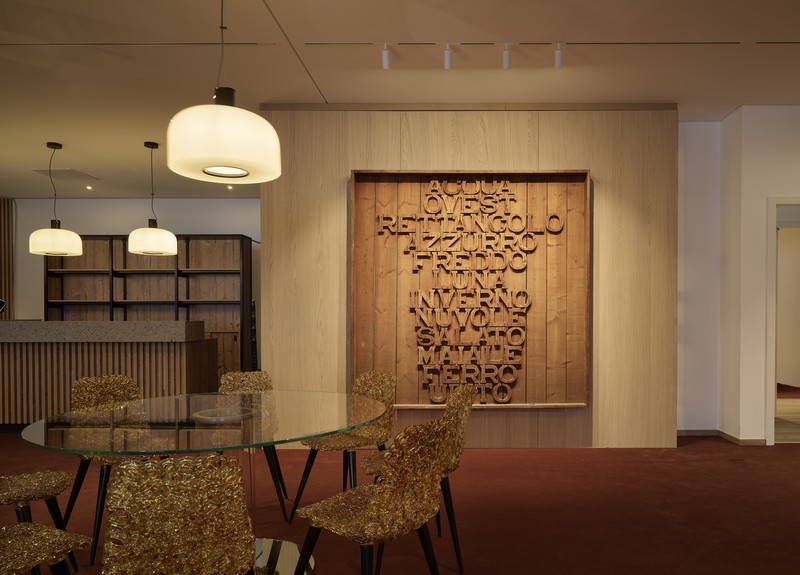
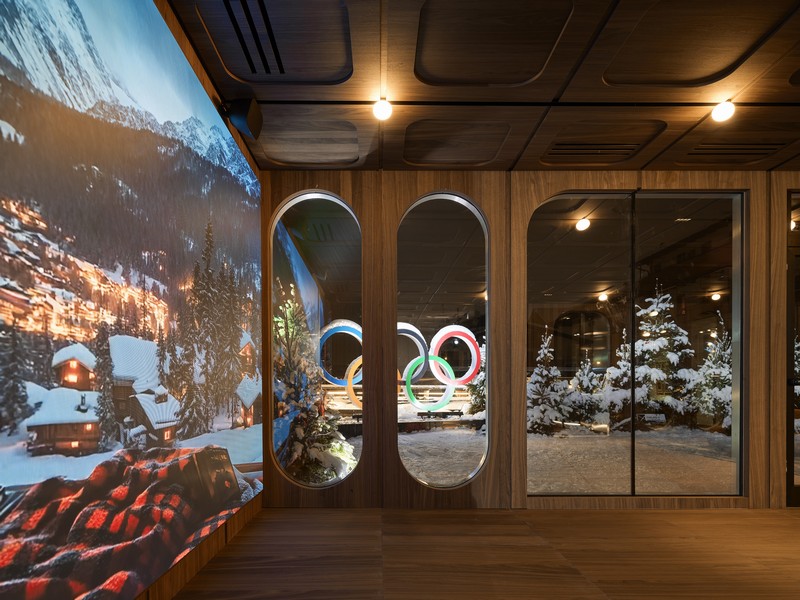
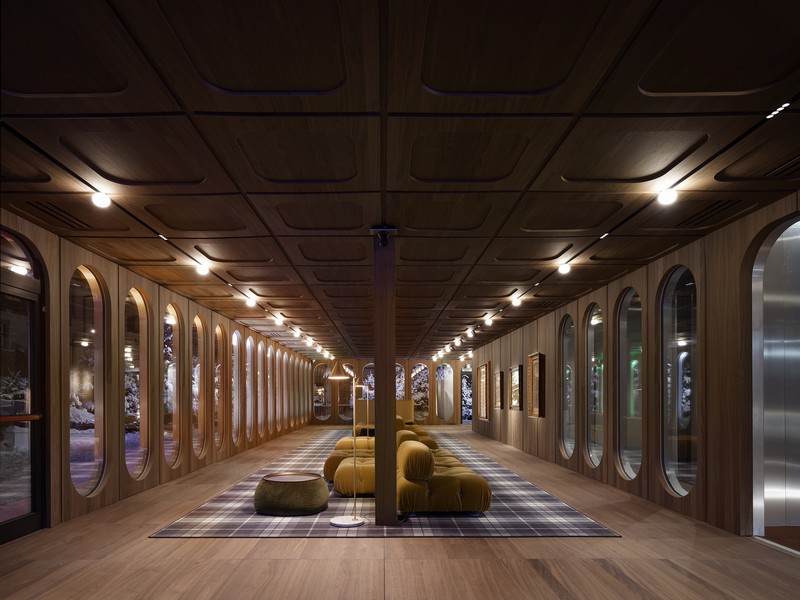
Casa Italia in Cortina is hosted at Farsettiarte, located in the very heart of Cortina and opened in 2020 following a visionary project that transformed the departure station of the old cable car connecting Belvedere to Pocol into an exhibition space. The building overlooks the old Town Hall and the Basilica of Saints Philip and James on one side, and the magnificent mountains of Cortina d’Ampezzo on the other. Here, the Musa project tells—through the voices of distinguished Italian and international artists—the story of Italy’s encyclopedic ability to collect, preserve, and enhance diversity, a value that the International Olympic Movement places among its highest principles.
The exhibition presents historical works by Giacomo Balla (Turin 1871 – Rome 1958), Massimo Campigli (Berlin 1895 – Saint-Tropez 1971), Mario Ceroli (Castelfrentano 1938), Giorgio de Chirico (Volos 1888 – Rome 1978), Filippo de Pisis (Ferrara 1896 – Milan 1956), Jean Fautrier (Paris 1898 – Châtenay-Malabry 1964), John Giorno (New York 1936 – New York 2019), Jiří Kolář (Protivín 1914 – Prague 2002), Joseph Kosuth (Toledo 1945), Sol LeWitt (Hartford 1928 – New York 2007), Hermann Nitsch (Vienna 1938 – Mistelbach 2022), Robert Rauschenberg (Port Arthur 1925 – Captiva Island 2008), Ottone Rosai (Florence 1895 – Ivrea 1957), Mario Schifano (Homs, Libya 1934 – Rome 1998), David Tremlett (St. Austell 1945), and Ben Vautier (Naples 1935 – Nice 2024), as well as two photographs by artists connected to the Lombardy–Veneto region: Luca Campigotto (Venice 1962) and Piero Gemelli (Rome 1952).
The selection of works, curated in collaboration with Farsettiarte, highlights how, at various moments during the 20th century and through highly diverse artistic languages, Italy—with its extraordinarily varied territory that makes it the second most biodiverse country after Brazil; with its geographical position that at times recalls Northern European landscapes and at others those of Africa; with its history of rulers and the ruled, enriching it with stories and monuments of inestimable value; and with its diverse humanity and complex customs—becomes a partner in that magical process we call inspiration.
With this exhibition, in addition to celebrating the Italian territory, CONI reaffirms the bond envisioned by Pierre de Coubertin at the very foundation of the Olympic Games, placing sport at the center of Parnassus—as an art among the arts—on the occasion of the Milano Cortina 2026 Olympic Games.
For information
FARSETTIARTE
Cortina d’Ampezzo, Piazza Roma 10 – Tel. +39 0436 860669
cortina@farsettiarte.it
www.farsettiarte.it
Press Office FARSETTIARTE
Stefania Bertelli
stefania.bertelli@artemidepr.it
+39 339 6193818